REP Fitness / Weight plates
REP Equalizer USA-Made Iron Plates
A cast-iron Olympic plate option with grip holes and a narrower handling profile for rooms where storage, carrying, and controlled loading matter more than repeated drops.
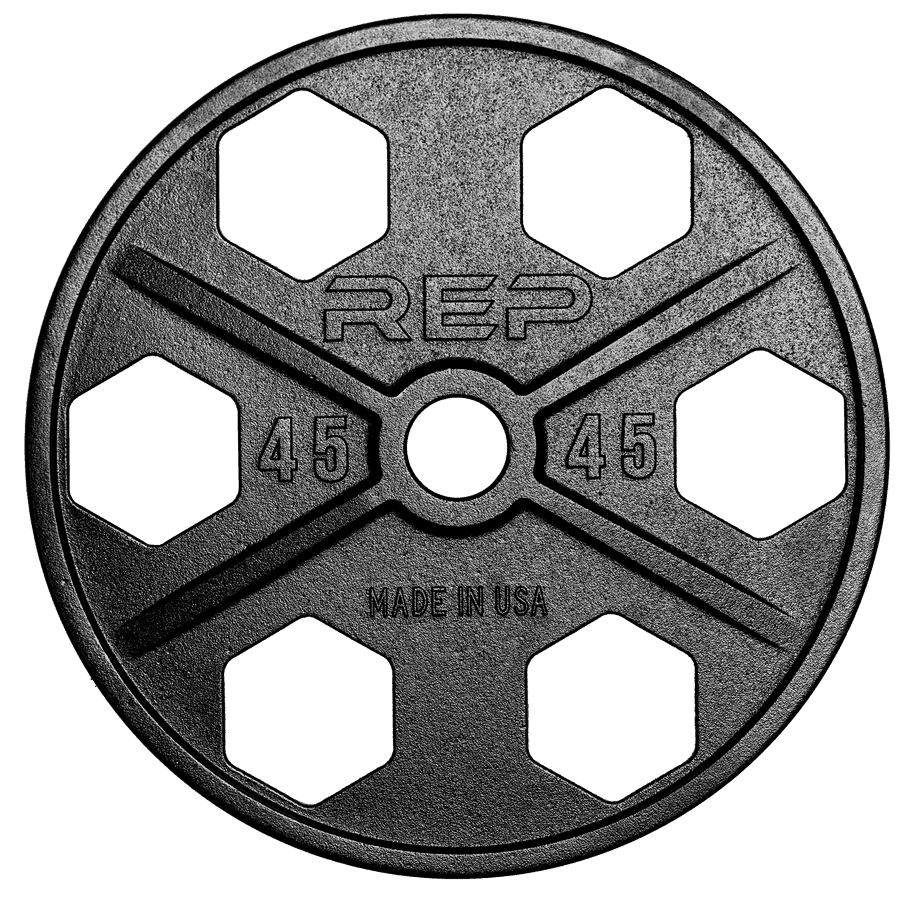
Best fit when
- A room with a no-drop rule and a storage path that benefits from grip holes
- People who prefer cast iron for controlled loading and individual handling
Choose another path when
- You need a plate format intended for repeated drops or a full rubber bumper envelope
- You plan to mix diameters with bumpers without checking the manufacturer's boundary
Training jobs
What earns the floor space.
- 01Build a compact Olympic plate loading path for controlled barbell or plate-loaded work
- 02Add individually handled plates for loading, carries, or selected plate exercises
Sourced specifications
Facts with a visible source.
- Use boundary
- REP does not recommend dropping the iron plates and warns against mixing them with bumpers because diameters are not uniform Source
Test queue
The protocol is assigned. The result is not.
Documents one weight plate sample's dimensions, collar fit, markings, handling, storage boundary, and declared impact limits without certifying a barbell, floor, rack, building, or user's lifting capacity.
- Hands-on gate
- 3 measurements / 4 observations
- Long-term gate
- 90 days / 20 sessions
0 completed first-party sessions. This record remains spec-reviewed, and no measurement or use result is implied.
- 01Plate dimensions3x
Record the visible diameter and thickness at repeatable points on the sample.
- 02Collar fit3x
Record how the collar opening fits the declared bar sleeve without treating fit as a bar safety certification.
- 03Weight markings2x
Document the stated weight format, units, markings, and visible identification on each sampled plate.
- 04Surface format3x
Record the material, finish, hub, edge, grip features, and visible seams without converting them into universal durability claims.
- 05Handling path3x
Record the carry, load, unload, and return path for the sampled plate within the declared room boundary.
- 06Storage envelope3x
Measure the space required for the selected pair or set and the access needed to remove one plate.
- 07Impact boundary2x
Record the manufacturer's stated drop or no-drop boundary without creating an editorial drop test or floor claim.
- 08Ownership condition log1x
Record changes in finish, collar, edge, markings, and storage contact over time.
Tradeoffs
What the recommendation does not hide.
- REP does not recommend dropping the iron plates, so the floor and movement boundary must stay controlled
- REP warns against mixing nonuniform plate diameters with its bumpers, which can narrow a mixed-set plan
Where it fits
Included in a complete setup.
Read the decision
Guides that put this record in context.
Choose bumper plates when a full-diameter rubber format fits the room and its floor boundary, and choose iron plates when controlled loading, individual handling, and compact storage matter more than drops. Do not mix formats by appearance alone. Check bar sleeve fit, plate diameter, floor conditions, storage, and each manufacturer's use boundary before buying.
Home gymWhat kind of rack and barbell setup fits your home gym?Choose a wall-mounted rack when the structure can be professionally verified and folding the station away solves a real room problem. Choose a freestanding rack when you have a stable dedicated footprint and want a simpler installation boundary. Choose a configurable rack only when you have measured the room and intend to build around its attachment and storage ecosystem. In every case, match the bar, plates, floor, bench, and return path to the training job before sending a retailer click.