Titan Fitness / Slam balls
Titan Rubber Tread Slam Ball
A sand-filled, textured dead-bounce ball for repeated throws and slams when a pronounced tread, broad weight range, and clear surface boundary matter more than a soft wall-ball feel.
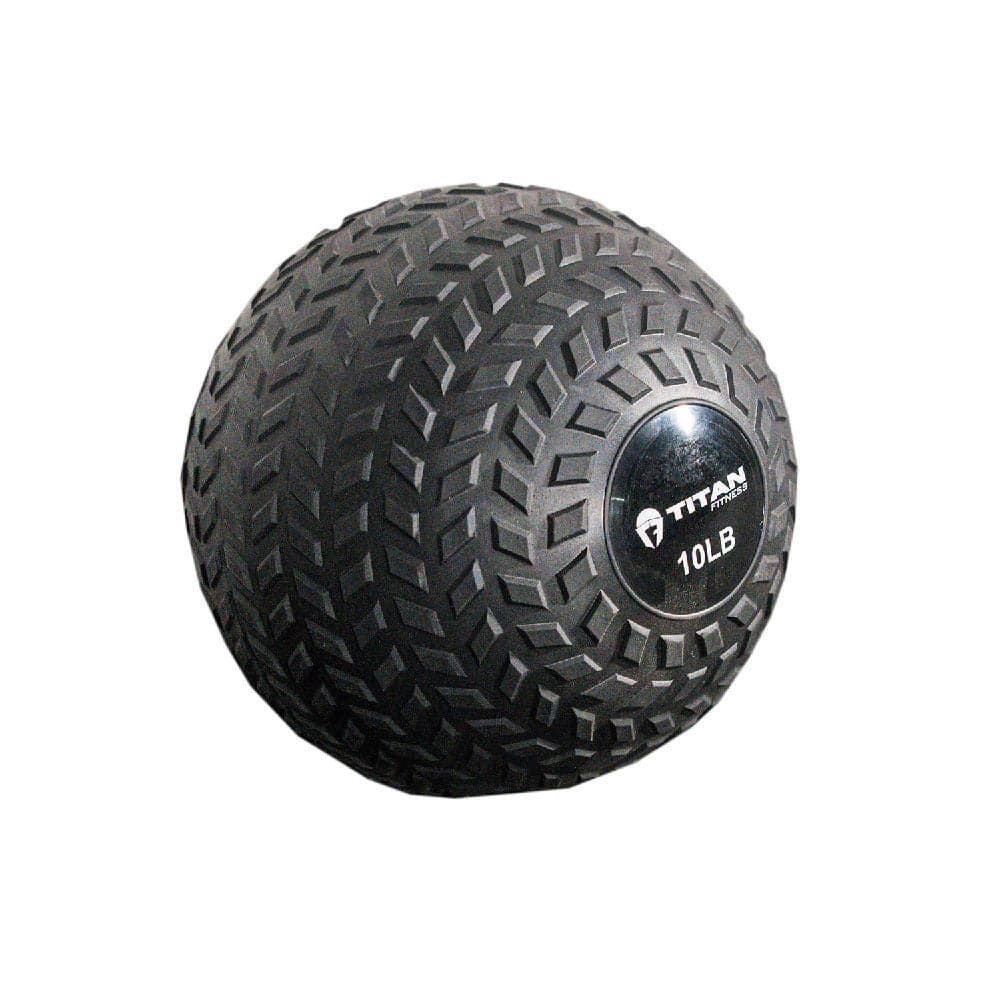
Best fit when
- A training area where a rigid tread improves grip during sweaty, faster sessions
- People who want a broad range of listed weights and can store a dense ball safely
Choose another path when
- You need a smooth, softer surface for partner catches or wall-ball rhythm
- Your floor, wall, lease, or neighbor boundary cannot tolerate repeated impact
Training jobs
What earns the floor space.
- 01Train ground slams, rotational throws, and loaded conditioning with a low-rebound implement
- 02Cover a wide load range while keeping the same treaded shell format
Sourced specifications
Facts with a visible source.
- Listed weight range
- The reviewed Titan product line lists options from 10 to 150 lb across its rubber tread formats Source
Test queue
The protocol is assigned. The result is not.
Documents one dead-weight slam ball sample's dimensions, mass, surface response, pickup reset, controlled use, and ownership wear without treating a no-bounce label as a tested result.
- Hands-on gate
- 3 measurements / 4 observations
- Long-term gate
- 90 days / 20 sessions
0 completed first-party sessions. This record remains spec-reviewed, and no measurement or use result is implied.
- 01Ball diameter3x
Record the unloaded sample diameter at its widest stable point.
- 02Unloaded mass3x
Record the exact sample mass without rounding beyond the instrument resolution.
- 03Surface compression3x
Record visible surface deformation under a controlled hand-compression check.
- 04Pickup and reset sequence3x
Observe the complete pickup, carry, placement, and reset sequence after a controlled release.
- 05Controlled slam response3x
Observe shell response, rebound, shape recovery, and pickup after a controlled overhead release.
- 06Rotational response3x
Observe handling and recovery during a controlled side-to-side or rotational movement.
- 07Shell integrity3x
Observe seams, fill movement, label legibility, and surface changes across the controlled circuit.
- 08Surface reset3x
Observe the cleanup, storage, and room reset required after the session.
- 09Ownership wear log1x
Record shell, seam, label, fill, odor, and surface changes over time.
Tradeoffs
What the recommendation does not hide.
- The tread can improve hand contact while feeling more rigid than a classic smooth medicine ball
- A sand-filled dead-bounce ball recovers near the floor, so the pickup and return path still need to be controlled
Where it fits