The first pass
Name the movements before you name the products.
A dumbbell, kettlebell, band, bench, or mat is useful only in relation to the work it supports. Start with the squat, hinge, push, pull, carry, floor, and conditioning jobs that the plan actually calls for.
This keeps a small room from turning into a storage project. Equipment that does not unlock a current movement or solve a known constraint waits until the training record gives it a reason.
- hhs-room-guidanceOffice of Disease Prevention and Health PromotionPublic-health guidance
- acsm-strength-guidanceAmerican College of Sports Medicine via PubMedProfessional consensus
The room
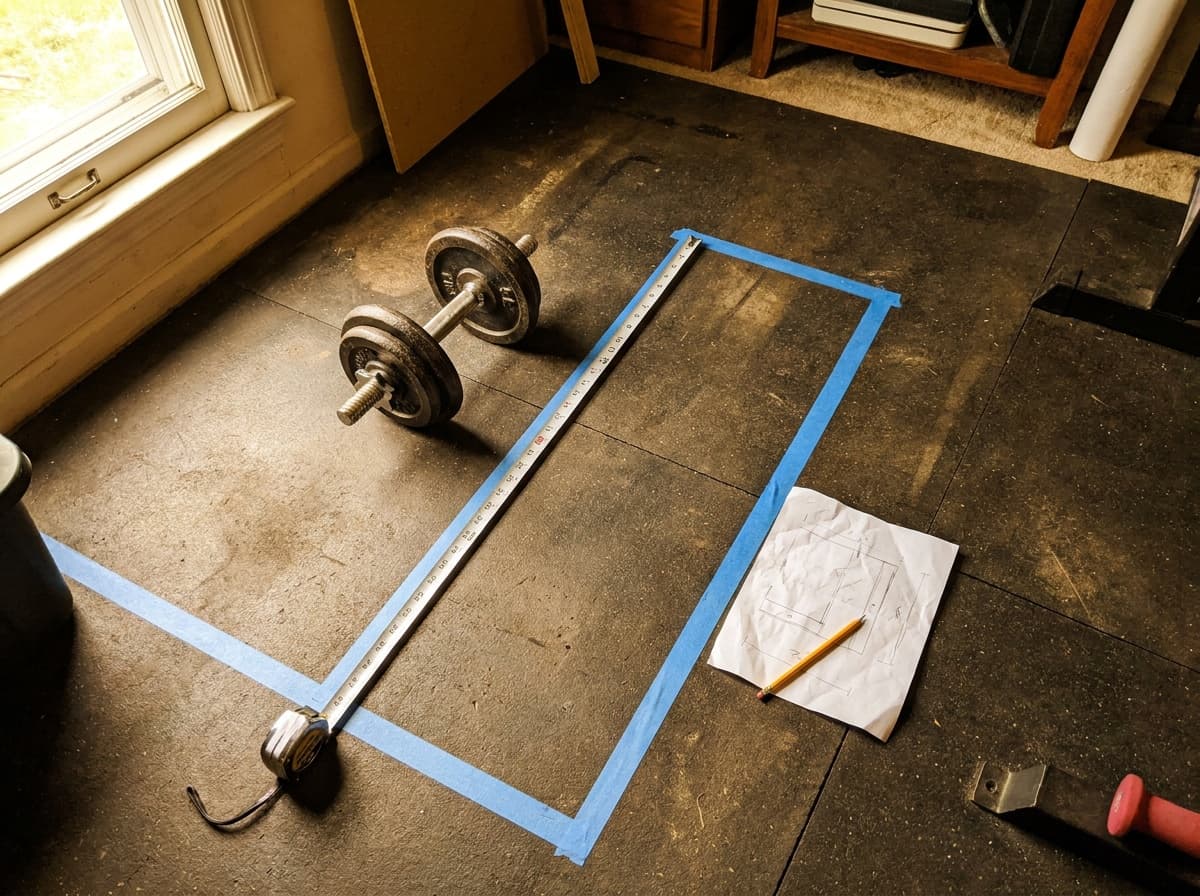
Measure the working envelope, not just the box.
The floor area under a bench is only one part of the decision. Add the space needed to pick up a load, step around it, reach an anchor, open a door, and return the equipment to storage without clipping furniture or creating a new hazard.
A compact product can still fail a shared room if it creates a route that nobody wants to reset. The room profile is part of the product fit.
- hhs-room-guidanceOffice of Disease Prevention and Health PromotionPublic-health guidance
The record
Separate the specification from the recommendation.
Manufacturer pages can establish dimensions, stated capacities, adjustment ranges, and included components. They cannot establish that a product is quiet in your room, stable for every movement, or durable after a year of ownership.
Workout Authority keeps those claims in separate fields so the product handoff remains useful without making the evidence look stronger than it is.
- acsm-strength-guidanceAmerican College of Sports Medicine via PubMedProfessional consensus
- ftc-substantiationFederal Trade CommissionProfessional consensus