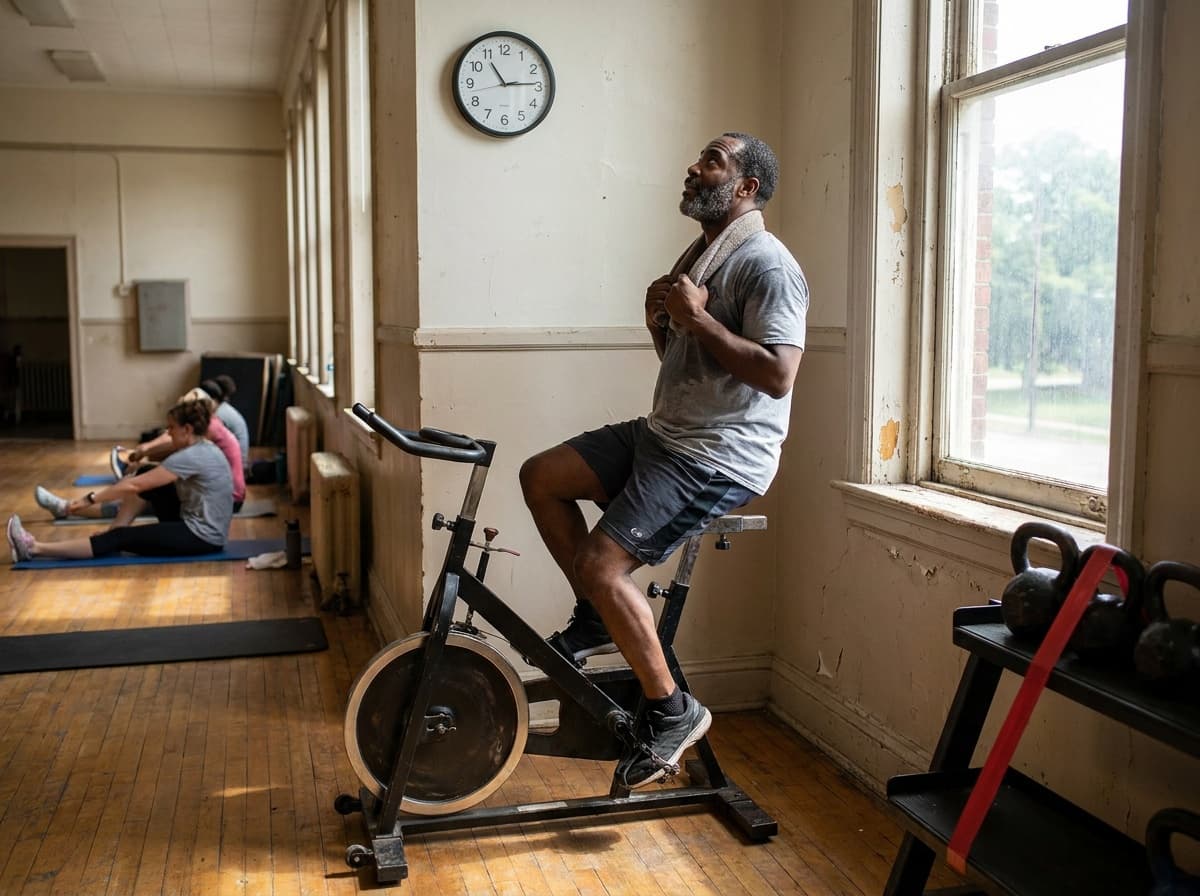
The first decision
Choose the motion you will actually repeat.
Walking, cycling, marching, and other modes can all be useful entry points. The best choice is the one that fits the room, schedule, and current tolerance well enough to appear again next week.
A home machine is not automatically a commitment device. Its footprint, noise, and reset routine decide whether it lowers friction or adds another obstacle.
- cdc-cardio-guidanceCenters for Disease Control and PreventionPublic-health guidance
- hhs-cardio-guidanceOffice of Disease Prevention and Health PromotionPublic-health guidance
The dose
Start below the destination and leave a comparison.
A short, moderate session gives you a starting record without requiring you to guess how much fatigue the week can absorb. Keep the duration or effort legible enough that the next session can be compared with the first.
When the same session feels more organized, increase one lever. Adding duration and effort at the same time makes the result harder to understand and the recovery cost harder to predict.
- cdc-cardio-guidanceCenters for Disease Control and PreventionPublic-health guidance
- hhs-cardio-guidanceOffice of Disease Prevention and Health PromotionPublic-health guidance
The week
Let the schedule show what the conditioning costs.
Strength and aerobic work can share a week, but the combination still has a time and recovery budget. A weekly plan should show the sessions together rather than making each lane look free of tradeoffs.
If the combined week stops fitting, reduce a lever before discarding the entire practice. The goal is a coherent week, not a collection of impressive individual sessions.
- concurrent-training-reviewSports Medicine via PubMed CentralSystematic review