Rogue Fitness / Training sleds
Rogue S-25 Fat Boy Sled
A fold-flat friction sled for portable drags and speed work when the training lane, surface, and plate-loading path are already defined.
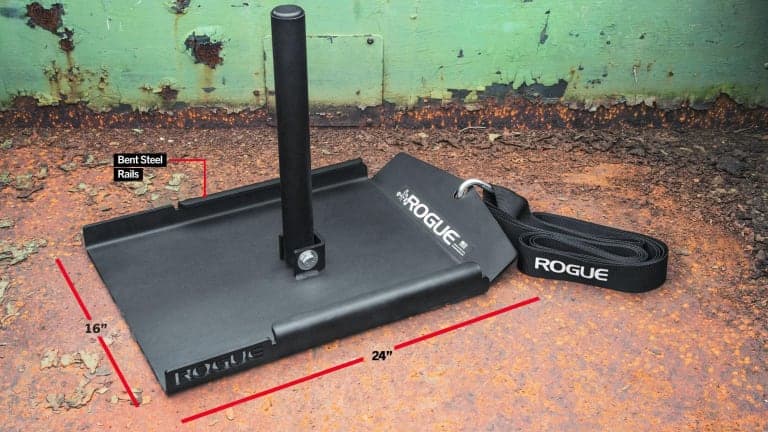
Best fit when
- A measured lane where friction, strap length, and surface contact can be checked before loading
- People who value a compact fold-flat storage state and a loadable plate post
Choose another path when
- You need a quiet indoor option without surface contact or cannot verify the lane and turning space
- Your room has no safe route for a strap, plate load, or sled return
Training jobs
What earns the floor space.
- 01Add loadable drag work to an outdoor, turf, or controlled indoor conditioning lane
- 02Keep a sled available that can return to a low stored height or travel in a vehicle
Sourced specifications
Facts with a visible source.
Test queue
The protocol is assigned. The result is not.
Documents one training sled sample's footprint, setup path, resistance interface, movement surface, handling, and storage without generalizing beyond that sample or environment.
- Hands-on gate
- 3 measurements / 4 observations
- Long-term gate
- 90 days / 20 sessions
0 completed first-party sessions. This record remains spec-reviewed, and no measurement or use result is implied.
- 01Stored footprint3x
Record the folded, parked, or wall-mounted dimensions that affect the return path.
- 02Working footprint3x
Record the occupied width and length with the selected handle, wheel, or ski configuration installed.
- 03Setup sequence3x
Observe the complete assembly, attachment, load, and pre-movement verification path.
- 04Push and pull control3x
Observe start, acceleration, turning, stopping, and return behavior in the declared lane.
- 05Resistance interface3x
Observe the load, wheel, ski, or magnetic-resistance change process without treating a setting as a universal intensity prescription.
- 06Surface response3x
Record visible contact, drag, rolling, scuffing, and lane changes on one declared surface.
- 07Carry and reset3x
Observe the handling, turning clearance, and return required after a recorded movement block.
- 08Ownership wear log1x
Record changes to skis, wheels, straps, handles, welds, fasteners, finish, and storage hardware over time.
Tradeoffs
What the recommendation does not hide.
- The fold-flat steel format stores compactly, but the friction interface can change by surface and may mark a lane
- A strap expands drag options while making the start, stop, and return path part of every setup
Where it fits