Name the movement
Start with the job, not the resistance color.
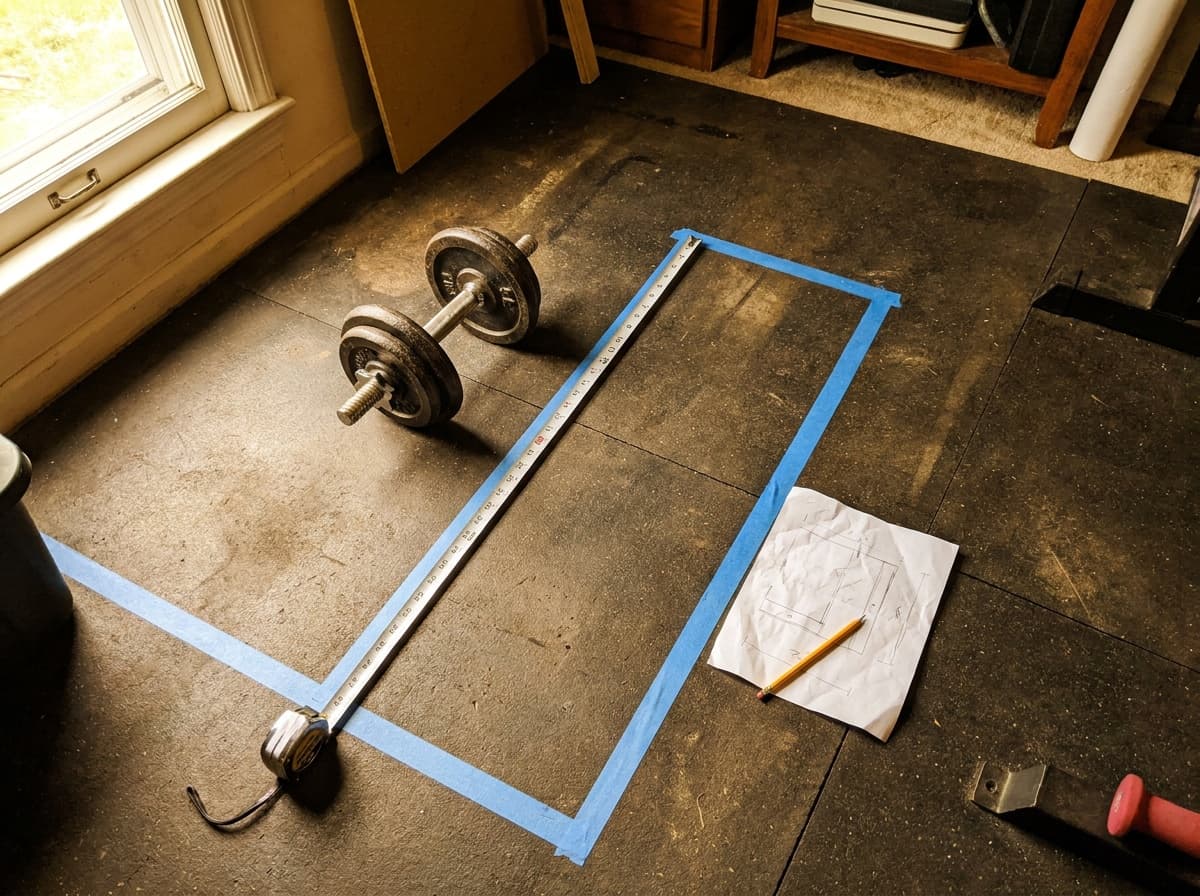
Write the movement and the direction of force before comparing bands. Assisted pull-ups, anchored rows, banded squats, presses, mobility work, and short lower-body loops each ask for a different path. The band only earns a place when the room can hold the person, the anchor, the full stretch, and the release without another person becoming the stop.
The resistance-training position stand supports matching the equipment format to the person's goals, schedule, and available resources. That supports a fit decision. It does not prescribe one band, resistance level, anchor, repetition target, or progression for every adult.
- acsm-resistanceAmerican College of Sports MedicineProfessional consensus
- rep-latex-freeREP FitnessManufacturer source
- rogue-loopRogue FitnessManufacturer source
Compare the format
Long loops and short loops solve different room problems.
REP lists its Latex-Free Pull-Up Bands at 41 inches long in four widths and resistance ranges, with individual or set packaging. That format can support assisted pulling, longer anchored paths, and banded resistance when the anchor and recoil route are verified. Rogue lists its Loop Bands in 9- and 12-inch diameters, six color-coded levels, and pairs or complete packages. That shorter loop favors compact, controlled movement rather than a long pull-up or row path.
Those dimensions describe the manufacturer's format. A listed range changes with stretch and setup, so it is not a direct free-weight conversion or a promise of equal difficulty across bodies and movements. Choose the smallest format that solves the job you actually wrote down.
- rep-latex-freeREP FitnessManufacturer source
- rogue-loopRogue FitnessManufacturer source
Verify the recoil
The anchor and release path are part of the load.
Inspect the band before each use for cuts, cracks, thinning, tack changes, contamination, or other visible weak points. Check that the anchor contact is compatible with the current instructions, that the band cannot slide into a sharp edge, and that the release path stays clear if the loop loses tension. Run an unloaded rehearsal before adding meaningful effort.
The Consumer Product Safety Commission recall database is a public check, not a substitute for the manufacturer's current manual or your own inspection. If the band rolls, catches, sheds, or changes the room boundary, stop and change the setup or the training job.
- rep-latex-freeREP FitnessManufacturer source
- rogue-loopRogue FitnessManufacturer source
- cpsc-recallsU.S. Consumer Product Safety CommissionPublic-health guidance
Choose the reset
A band is useful when it can return to a known state.
A long band set needs a clean hanging, drawer, or bag state that does not create permanent folds, tangles, or contact with heat and sharp edges. A short loop set needs a way to keep the different levels visible and separated. Storage is not an afterthought: if the band lies across a walkway or shares a hook with an incompatible object, the next session starts with another unresolved decision.
Choose REP when a latex-free 41-inch format and several selectable widths solve the movement. Choose Rogue Loop Bands when short, color-coded loops fit the controlled path. Choose the existing Monster Bands when a longer latex loop and higher-resistance anchored work are the actual job. Choose no band yet when the anchor, material, or reset route is still a guess.
- rep-latex-freeREP FitnessManufacturer source
- rogue-loopRogue FitnessManufacturer source
- acsm-resistanceAmerican College of Sports MedicineProfessional consensus