Step one
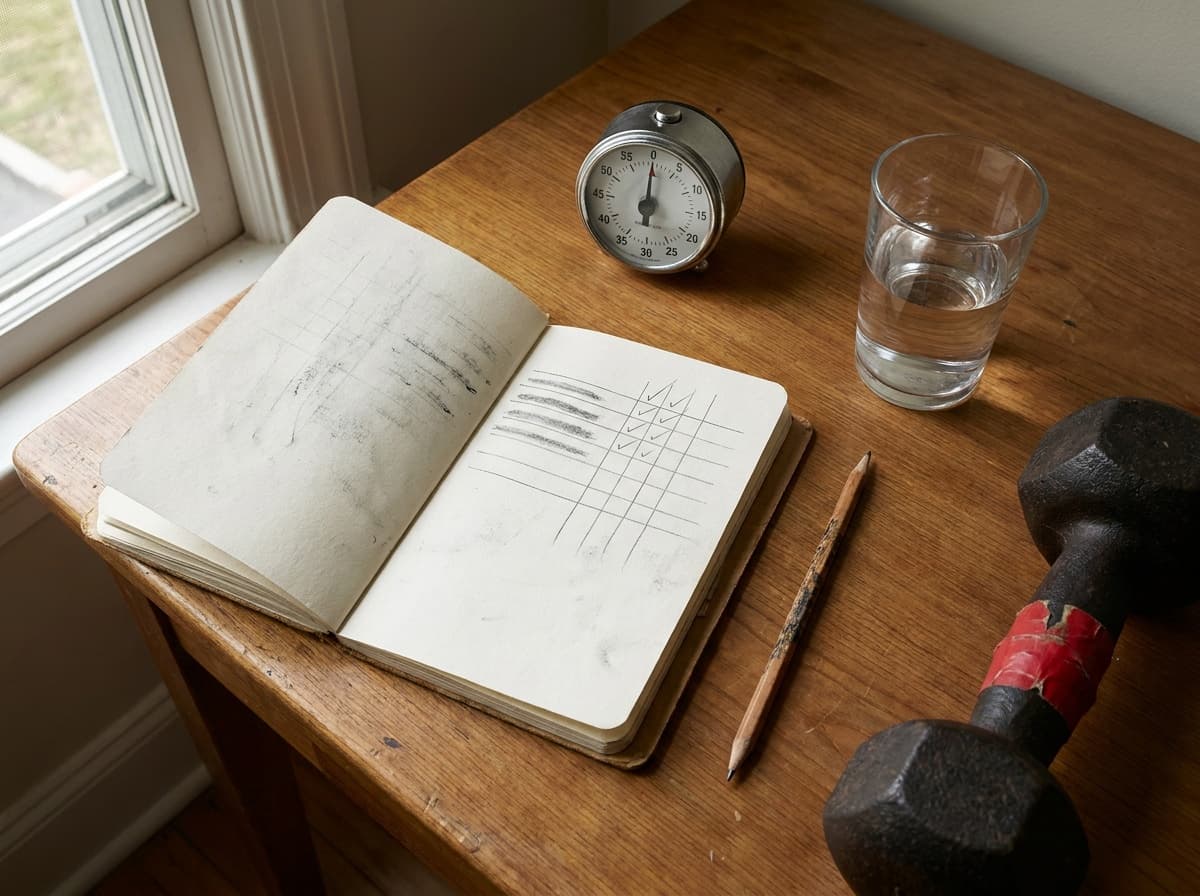
Design a week you can recognize.
Begin with two strength sessions placed on days that are usually available. Public-health guidance uses two weekly muscle-strengthening days as the baseline, while the ACSM update emphasizes consistency over unnecessary program complexity.
A plan is not repeatable if every session depends on ideal energy, unlimited time, or a different exercise list. Use the same basic structure long enough to learn what normal effort and recovery feel like.
- cdc-adultsCenters for Disease Control and PreventionPublic-health guidance
- acsm-updateAmerican College of Sports MedicineProfessional consensus
Step two
Use the resistance you can set up quickly.
Home training does not need to imitate a commercial gym. Federal guidance recognizes weights, bands, bodyweight, and load-carrying tasks as forms of muscle-strengthening activity. ACSM also reports that home-based routines can be effective.
Choose tools that let you make the exercise appropriately challenging and repeat the setup. Bodyweight may be enough for one movement and too limited for another, which is why a small combination of bodyweight, a band, or adjustable load often works well.
- hhs-guidelinesU.S. Department of Health and Human ServicesPublic-health guidance
- acsm-updateAmerican College of Sports MedicineProfessional consensus
Step three
Build around four recognizable patterns.
Across the two sessions, include a squat or lunge, a hinge, a push, and a pull. Add trunk or carry work when it fits. This is a practical way to translate major-muscle-group guidance into a home program without producing a long checklist of isolated muscles.
One exercise can have several valid versions. An incline push-up can become lower over time, a bodyweight squat can become a goblet squat, and a band row can progress through band tension or body position.
- hhs-guidelinesU.S. Department of Health and Human ServicesPublic-health guidance
Step four
Leave room to learn the session.
The first goal is not to discover your limit. It is to make the positions, sequence, and recovery demands familiar enough to repeat. Stop a set when technique becomes less dependable or when the planned effort has clearly been reached.
Training to momentary failure is not required for useful outcomes in the 2026 ACSM review. That gives beginners permission to build consistency without turning each workout into a test.
- acsm-positionAmerican College of Sports MedicineSystematic review
- acsm-infographicAmerican College of Sports MedicineProfessional consensus
Boundary
Use qualified help when the problem is clinical.
General exercise guidance cannot determine what is appropriate for acute pain, a diagnosed condition, recent surgery, pregnancy, or rehabilitation. Those situations need advice matched to the person and condition.
If health status changes the movement choice or safe effort, consult an appropriate healthcare or physical-activity professional before treating this beginner template as your plan.
- cdc-conditionsCenters for Disease Control and PreventionPublic-health guidance