Name the job
Start with the movement you will repeat, not the machine category.
Write the next month of use in plain language: desk walking, short indoor walks, walk-jog intervals, or regular running. The equipment decision follows that job. A machine that looks impressive but never clears the room is a storage object, not a conditioning system.
Use the public-health range to plan activity, then decide whether a machine removes enough friction to earn its space.
- cdc-adultsCenters for Disease Control and PreventionPublic-health guidance
- hhs-guidelinesU.S. Department of Health and Human ServicesPublic-health guidance
The walking pad
The C2 trades speed and width for a small reset path.
WalkingPad lists the C2 with a 1 to 4 mph range, a 47.2 by 15.7 inch walking area, a 220-pound capacity, and a 32.5 by 20.4 by 5.4 inch folded size. That makes it a walking-first option whose value depends on a person being willing to unfold, use, roll, and store it repeatedly.
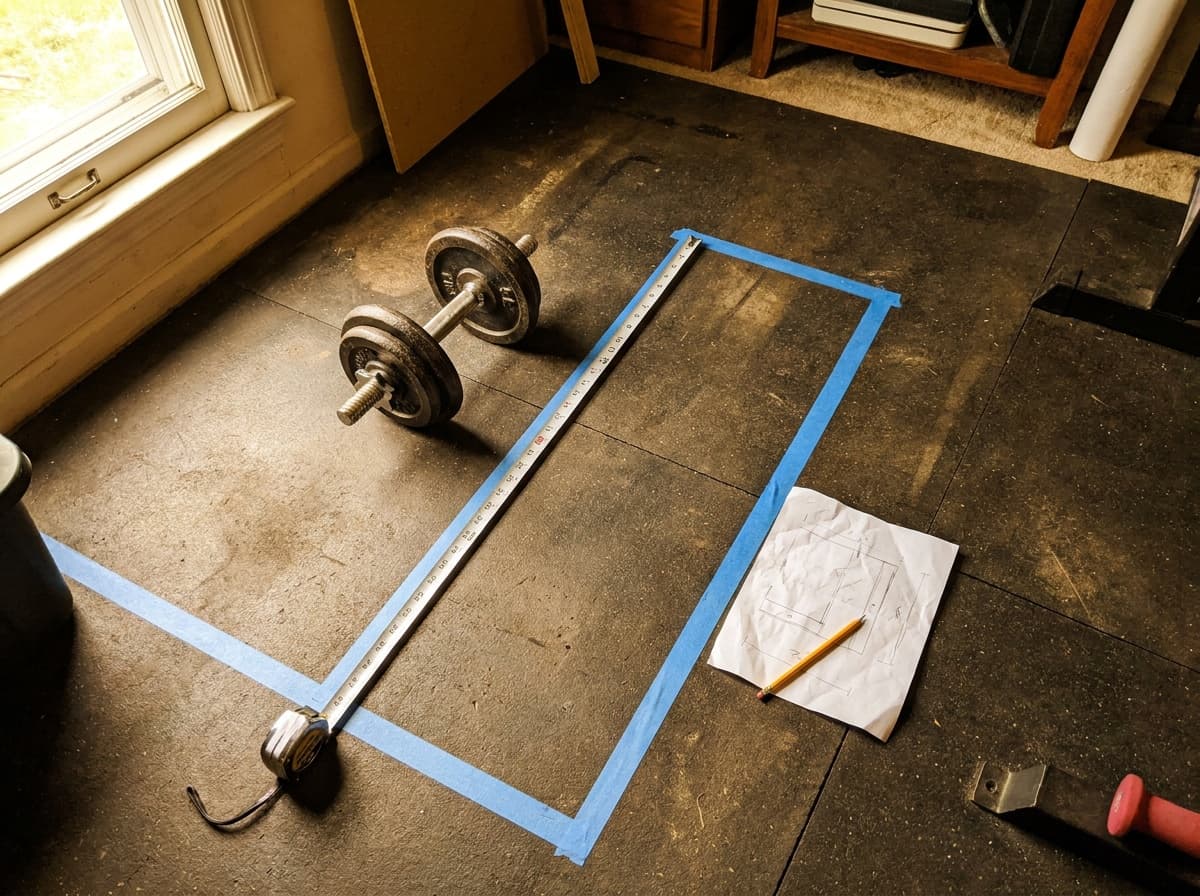
The slim box is not the full session envelope. Mark the approach, the space beside the belt, the power path, and the place where the pad will rest while it is not in use. The manufacturer's quiet language is a source claim, not a room measurement or a promise to a neighbor.
- walkingpad-c2WalkingPadManufacturer source
The compact run lane
The R2 earns more width when jogging and running are real requirements.
WalkingPad lists the R2 at 0.5 to 7.5 mph with a 47 by 17 inch running area, a 240-pound capacity, a 39 by 28 by 6 inch folded size, and an adjustable handrail. Those specifications move it beyond desk walking, but they also add a wider folded object, a taller working profile, and a larger path to clear before a session.
The R2 can be a useful middle format when a full-size treadmill is too permanent and a walking pad cannot cover the job. It is not a guarantee that a smaller deck is right for every runner, gait, room, or training goal.
- walkingpad-r2WalkingPadManufacturer source
The permanent lane
The T101 spends more room to make running the primary job.
Horizon lists the T101 Connect with a 20 by 55 inch running area, a 0.5 to 10 mph speed range, 0 to 10 percent incline, and a 70.5 by 33.5 by 59 inch assembled size. Horizon also lists a 46 by 34 by 61 inch folded size and a 180-pound machine weight in its dimension reference.
That is a full station even when folded. A treadmill this size needs a clear approach, a power plan, a maintenance position, and a floor boundary that matches the building. Folding reduces the parked length, but it does not turn the room into a shared-space guarantee.
- horizon-t101Horizon FitnessManufacturer source
- horizon-dimensionsHorizon FitnessManufacturer source
The decision
Let the room reject the wrong format before commerce does.
Choose the C2 when walking is enough and a daily reset is realistic. Choose the R2 when a compact folded format must also cover jogging or running. Choose the T101 when a wider deck, incline, and full running lane are central to the week and the machine can stay in a dedicated position.
If the tape rehearsal fails, keep the conditioning job and change the format. Outdoor walking, a bike, a rope, or a bodyweight interval may be a better next move than forcing a treadmill into a room that cannot support its working envelope. This guide picks the machine; for programming the indoor and outdoor miles, Ruck Authority's pavement, trail, and treadmill comparison covers how each surface changes the session.
- walkingpad-c2WalkingPadManufacturer source
- walkingpad-r2WalkingPadManufacturer source
- horizon-t101Horizon FitnessManufacturer source