Conditioning equipment / room and mode
Choose a conditioning mode you can repeat.
The right conditioning tool is the one whose movement, setup, noise, and reset demands match the week you actually have.
Built for:adults building aerobic work at home, sharing a room, comparing machines, or choosing portable tools for mixed training.
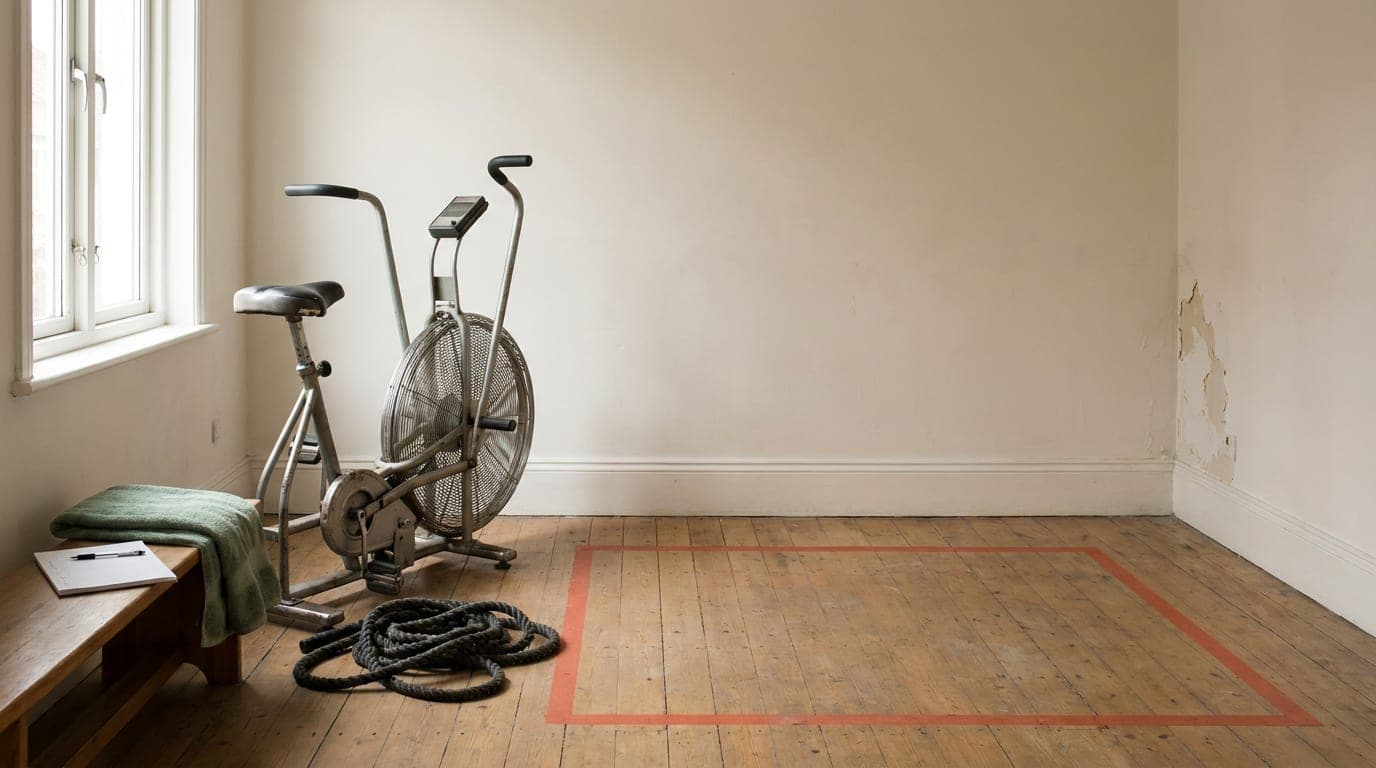
Match the machine to the weekly dose.
Name the conditioning job first, then compare the working envelope, intensity control, storage, and surface boundary. A product category alone cannot tell you whether the week will happen.
The useful conditioning purchase is the one that leaves a clear next session, a realistic room, and an honest boundary around what the equipment can measure.
Room limits eliminate options first.
Each route keeps the training job visible, then hands you to a canonical guide, program, exercise, tool, or equipment record.
- 01
Name the mode
Walking, running, cycling, jumping, and pushing solve different jobs.
The conditioning hub keeps weekly amount, session intensity, and equipment format separate before a product comparison begins.
Open conditioning guidance - 02
Check the room
Measure the working path and the return path.
Walking pads and treadmills need deck, approach, power, storage, and clearance decisions. The room-fit guide makes those constraints visible.
Compare walking and running formats - 03
Go portable
A rope can disappear, but the landing still needs a plan.
Jump ropes and heart-rate tools can travel, while the floor, ceiling, neighbors, and tracking boundary still shape the useful choice.
Plan a portable conditioning path - 04
Protect the lane
Sleds and ropes need more clearance than their storage footprint suggests.
The sled and battle-rope guides separate anchor, surface, turning, stop distance, wave clearance, and storage before commerce.
Plan the conditioning lane - 05
Make effort legible
A sensor can measure a signal without prescribing the session.
Heart-rate monitors can support a measurement routine, but a number does not prove intensity, readiness, or a personalized prescription.
Understand heart-rate tools
Source boundary
Useful advice still needs a limit.
These references support the category-level guidance on this page. They do not turn general information into a diagnosis, individualized prescription, or product test.
- 01Adding Physical Activity as an AdultCenters for Disease Control and Prevention
- 02Physical Activity Guidelines for AmericansOffice of Disease Prevention and Health Promotion
- 03Benefits of Physical ActivityCenters for Disease Control and Prevention