Name the pull
Start with the vertical-pulling job, not the bar shape.
A mounted bar can support hangs, pull-ups, assisted work, and ring attachments, but the right decision depends on the session you will repeat. If the current job is simply to train the upper back and elbow flexors, a band anchor, ring setup, or supported row may already cover it without changing the room. A permanent bar earns its space when the vertical path itself is the useful constraint.
The 2026 ACSM resistance-training position stand treats home-based training and different equipment formats as viable options for healthy adults. That supports choosing the format that makes the next session more repeatable, not assuming a mounted bar is required for strength.
- acsm-resistanceAmerican College of Sports MedicineProfessional consensus
- rogue-p4Rogue FitnessManufacturer source
- rep-pull-upREP FitnessManufacturer source
Verify the surface
A product load rating is conditional on the installation.
Rogue describes the P-4 as a wall or ceiling system that must be anchored to concrete or wood studs, and its mounting hardware is not included. REP describes its bar as a stud-mounted product with included hardware and a conditional rating when mounted properly. Those statements define the product boundary. They do not verify the studs, masonry, fasteners, lease terms, or ceiling structure in your room.
If the surface or permission is uncertain, stop at the decision boundary. Do not turn a published capacity into a promise about a building, and do not infer that a different fastener or improvised backer has the manufacturer's approval.
- rogue-p4Rogue FitnessManufacturer source
- rogue-p4-manualRogue FitnessManufacturer source
- rep-pull-upREP FitnessManufacturer source
- cpsc-recallsU.S. Consumer Product Safety CommissionPublic-health guidance
Measure the envelope
Depth and exit space matter as much as the bar width.
The Rogue P-4 lists a 30-inch bar depth. REP lists 14- and 26-inch projection choices, a 50-inch total width, and 46 inches of usable bar. Those numbers are useful planning inputs, not a complete movement clearance. Add the overhead path, rear space, nearby doors, light fixtures, and the way you will enter and leave the station without crossing a walkway.
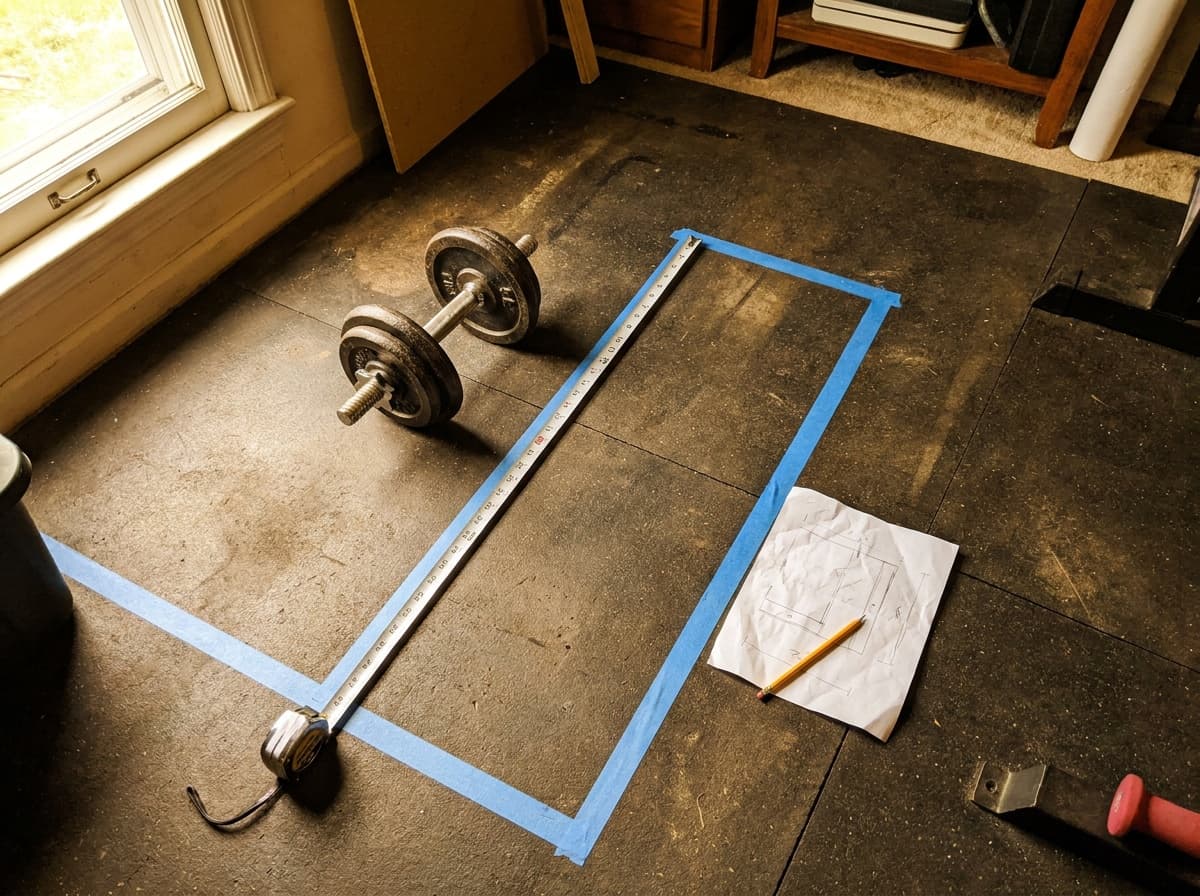
A compact bar can still be a poor fit if it blocks a closet, forces a landing into furniture, or turns a shared room into a permanent obstacle. Mark the full envelope with tape before buying and keep the planned use inside the manufacturer's stated boundary.
- rogue-p4Rogue FitnessManufacturer source
- rep-pull-upREP FitnessManufacturer source
Choose the fallback
Keep the training job moving when the structure is not ready.
A pending installation does not require a stalled training week. Use the existing band and door-anchor path, rings only where their own anchor is verified, or a supported row while the permanent structure question is resolved. These are not claims of identical loading or identical movement. They are ways to preserve the pulling intent without hiding an unresolved installation risk.
The strongest choice may be no bar yet. Buy only when the structure, clearance, entry path, and use boundary are all explicit. A product record can show the current specification and retailer path, but it cannot certify the room or turn an editorial review into a hands-on installation test.
- acsm-resistanceAmerican College of Sports MedicineProfessional consensus
- rogue-p4-manualRogue FitnessManufacturer source
- cpsc-recallsU.S. Consumer Product Safety CommissionPublic-health guidance