Mobility and recovery equipment / tool choice
Choose the tool by the task and pressure you can repeat.
A mat, roller, massage device, or anchor can support a useful routine when the task, pressure, placement, and return path are clear.
Built for:adults using preparation, mobility, or recovery work to support training without turning ordinary movement into a medical claim.
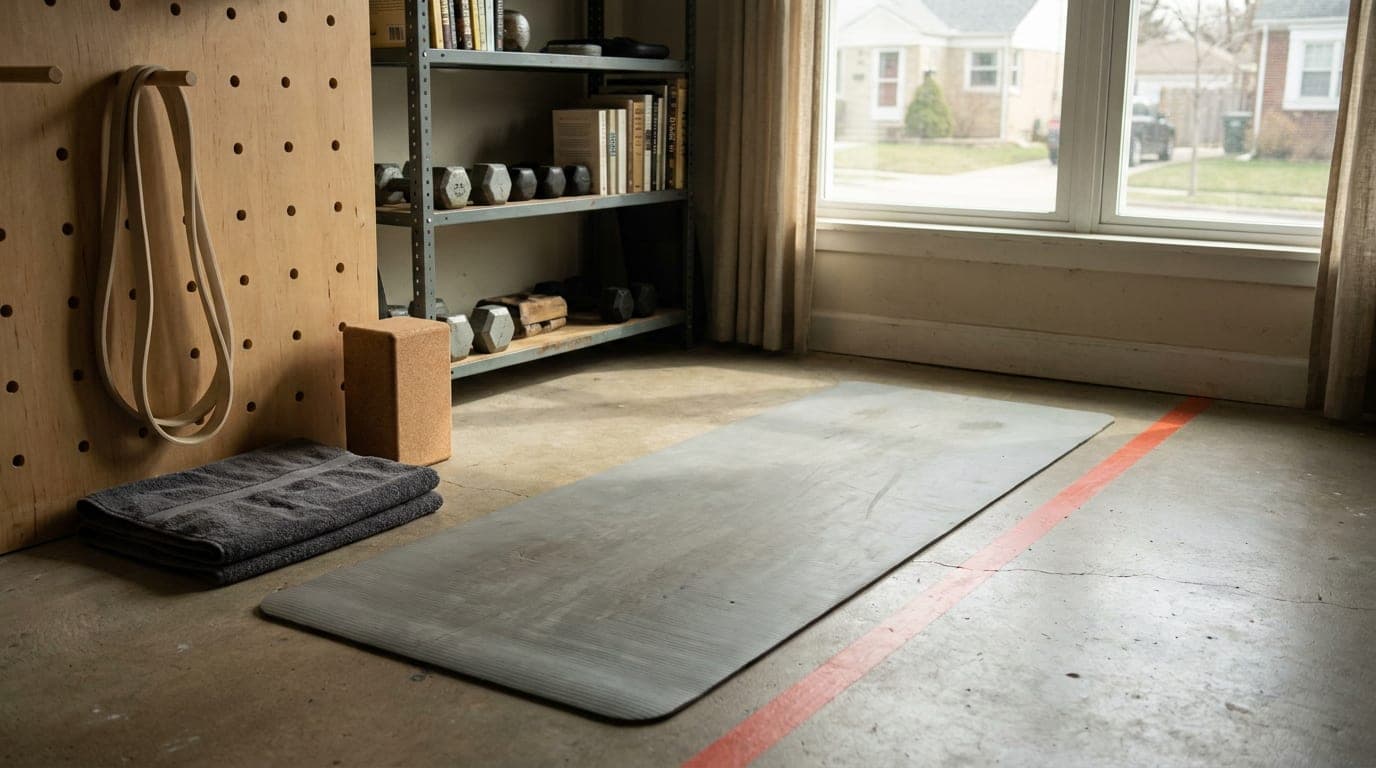
Use the smallest tool that changes the task.
Define the job first. Choose the smallest tool that makes the job repeatable, then keep pressure, surface, storage, and clinical boundaries visible.
A tool can make a routine easier to repeat. It cannot turn a general mobility or recovery idea into diagnosis, treatment, or individualized clearance.
Choose the smallest tool that does the job.
Each route keeps the training job visible, then hands you to a canonical guide, program, exercise, tool, or equipment record.
- 01
Name the task
Preparation, mobility, recovery, and symptom care are not one job.
The mobility hub keeps training preparation and recovery routines practical while stating when a symptom or clinical question needs another kind of help.
Open mobility guidance - 02
Choose the surface
A mat changes the working envelope before it changes the feeling.
Thickness, traction, roll-up behavior, and storage matter when the mat has to support kneeling, floor work, or a daily reset.
Compare training surfaces - 03
Compare pressure
A roller and a massage gun are different interfaces.
The recovery comparison keeps pressure, speed, access, noise, charging, and the no-diagnosis boundary visible instead of treating one tool as universally superior.
Compare recovery tools - 04
Keep the anchor honest
A strap or band still needs a stable setup.
Door anchors and resistance bands can add portable movement, but inspection, recoil, attachment, and exit paths come before a stronger claim.
Plan a band anchor - 05
Know the boundary
A recovery tool cannot diagnose or clear a symptom.
Use the method and source notes to separate a general training support decision from pain, injury, pregnancy, or clinical care questions.
Read the editorial method
Source boundary
Useful advice still needs a limit.
These references support the category-level guidance on this page. They do not turn general information into a diagnosis, individualized prescription, or product test.
- 01Physical Activity Guidelines for AmericansOffice of Disease Prevention and Health Promotion
- 02Benefits of Physical ActivityCenters for Disease Control and Prevention
- 03Exercise and Physical Activity Resource CenterAmerican College of Sports Medicine