Strength training / start here
Build strength you can recognize next week.
Choose a manageable training rhythm, cover the major movement patterns, and progress one useful lever at a time.
Built for:adults starting again, training at home, or building a strength routine around a real schedule.
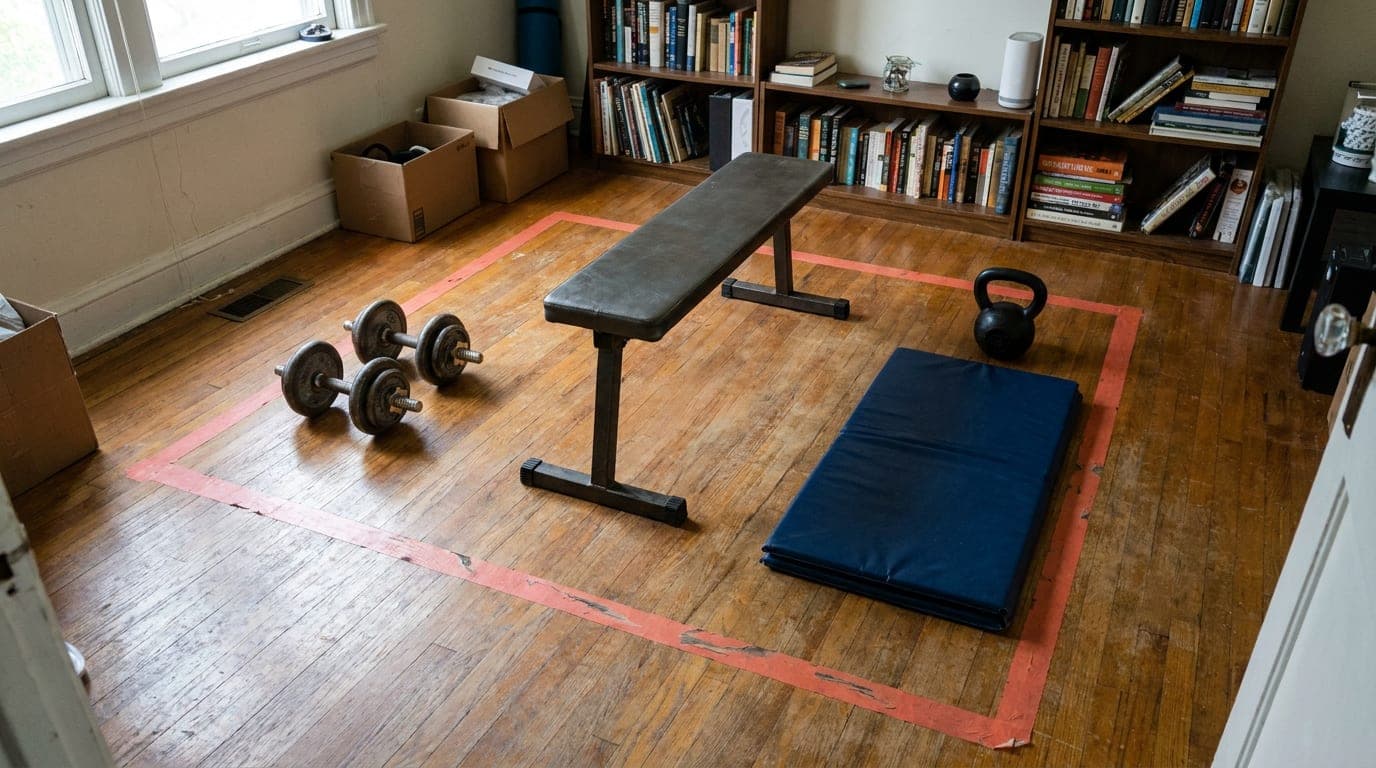
A workable strength week starts here.
Start with two or three repeatable sessions, use movements that cover the whole body, and progress load, reps, range, or control without turning every workout into a test.
Workout Authority separates category guidance from the exact starting load, range, or exercise choice that still needs to fit the person in front of it.
Build the week before adding load.
Each route keeps the training job visible, then hands you to a canonical guide, program, exercise, tool, or equipment record.
- 01
Choose the week
Start with a plan that leaves room for life.
The 30-Minute Restart gives you a low-friction runway. Home Strength Foundation adds a longer progression path when three weekly sessions are realistic.
Explore strength plans - 02
Learn the movement
Use patterns instead of a body-part maze.
Squat, hinge, push, pull, carry, and rotate-resist records make substitutions legible when equipment or setup changes.
Open the exercise library - 03
Make the room work
Buy the loading path before the accessories.
The home-gym planner keeps your training job primary, then checks space, noise, storage, and build scope before a product handoff.
Plan the equipment - 04
Check the anchor
Make suspension work earn its place.
Rings add adjustable rows, presses, and support work in a small footprint, but the overhead support, strap route, and exit path come first.
Read the ring fit guide - 05
Control the recoil
Choose a band that fits the movement and room.
Long loops and short bands solve different setup problems. The band guide keeps anchor, inspection, recoil, material, and storage visible before the product handoff.
Plan the band path - 06
Build the loading path
Start the barbell with the room, not the catalog.
The barbell fundamentals guide connects the lift jobs to the rack, bench, plates, floor, storage, and return path before a purchase handoff.
Plan the barbell path - 07
Choose support
Add a belt or strap only when the lift names the job.
Short Olympic straps, longer leather straps, flexible nylon belts, and structured leather belts solve different fit and release problems after the main barbell path is ready.
Compare lifting accessories - 08
Add a rack interface
Choose the attachment after the rack has a job.
Landmines, dip interfaces, adjustable handles, and collars solve different rack and barbell problems. Check family, clearance, hardware, and storage before the handoff.
Compare rack attachments
Source boundary
Useful advice still needs a limit.
These references support the category-level guidance on this page. They do not turn general information into a diagnosis, individualized prescription, or product test.
- 01Adding Physical Activity as an AdultCenters for Disease Control and Prevention
- 02Resistance Training Prescription for Muscle Function, Hypertrophy, and Physical PerformanceBritish Journal of Sports Medicine / PubMed
- 03Resistance Training Guidelines UpdateAmerican College of Sports Medicine