Name the work
Start with the lifts you can repeat, not the rack you can browse.
A useful barbell system might cover a squat, press, hinge, and pull, but the exact list depends on the training week and the room. Write the movements you expect to repeat, then note the support each one needs: rack and safeties, bench and handoff, plates and floor, storage, and a clear return route. The resistance-training position stand supports matching resistance work to a person's goals, schedule, and resources. It does not make a barbell necessary or validate this exact exercise list.
Use the canonical Barbell Back Squat, Barbell Bench Press, Barbell Deadlift, and Barbell Row pages as instruction starting points. Each page keeps the setup and return boundary visible, then links to a viable alternative when the barbell path is not the next useful move.
- acsm-resistanceAmerican College of Sports Medicine via PubMed CentralProfessional consensus
- barbell-and-rack-guideWorkout AuthorityProfessional consensus
Rehearse support
The first set is a room test as much as a movement test.
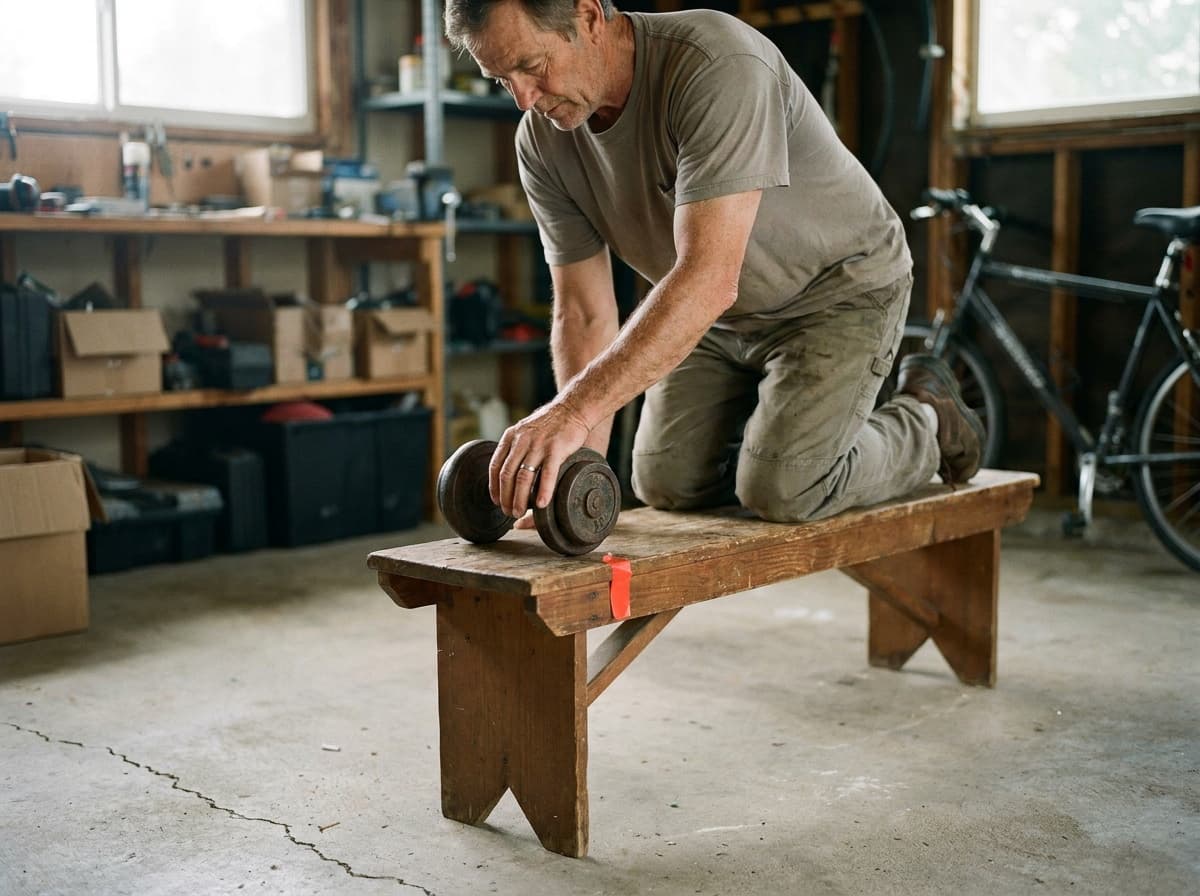
Set the rack, bench, bar, and floor in the actual positions you plan to use. Tape the bar path, walkout, handoff, plate-loading space, and return route. A wall-mounted rack can trade stored depth for an installation boundary, while a freestanding rack can trade that wall question for a permanent footprint. Neither manufacturer's description verifies your wall, floor, building, or handoff.
Rehearse the empty bar or a supported alternative before adding plates. Confirm that you can unrack, move, stop, rerack, set down, and clear the room without a blind step or improvised spot. If any step is unclear, keep the training job on a dumbbell, kettlebell, or bodyweight path while the setup is corrected.
- barbell-and-rack-guideWorkout AuthorityProfessional consensus
- rogue-rmlRogue FitnessManufacturer source
- rep-pr1100REP FitnessManufacturer source
Choose the load
Plate format changes the floor, storage, and progression problem.
Full-diameter bumper plates create a rubber loading format with a larger storage envelope and a declared drop boundary. Cast-iron plates can provide a narrower handling profile for controlled lifts, but the floor and set-down rule become stricter. Change plates solve a different job: adding small increments to an existing Olympic bar without turning every progression step into a large jump.
REP's Competition Bumper Plates publish a low-bounce bumper format with a zinc-coated insert and multiple pound pair options. Rogue's LB Change Plates publish 1.25, 2.5, 5, and 10 pound increments with a 50.40 mm collar opening. Those are manufacturer specifications. They do not certify your floor, bar, loading technique, or the value of a mixed plate set.
- rep-competition-bumpersREP FitnessManufacturer source
- rogue-change-platesRogue FitnessManufacturer source
- plate-guideREP FitnessManufacturer source
Close the loop
A barbell earns its footprint when the room can reset after the set.
The barbell is not finished when the repetition ends. Return the bar, plates, bench, collars, and accessories to a defined home without crossing a doorway, another training lane, or an unverified surface. Storage is part of the movement decision because the next session starts with retrieval and setup, not with the first repetition.
Use the Barbell and Rack Station or Home Gym Planner to compare the full system against the room's space, noise, storage, and build constraints. The connected product records remain spec-reviewed until a qualified tester completes the assigned protocol, so the choice is based on fit and provenance rather than a synthetic rating.
- setup-stationWorkout AuthorityProfessional consensus
- home-gym-plannerWorkout AuthorityProfessional consensus
- cpsc-recallsU.S. Consumer Product Safety CommissionPublic-health guidance