Carry / Developing
Backward Sled Drag
Practice a backward walking drag with a visible lane, a stable foot path, and a deliberate stop.
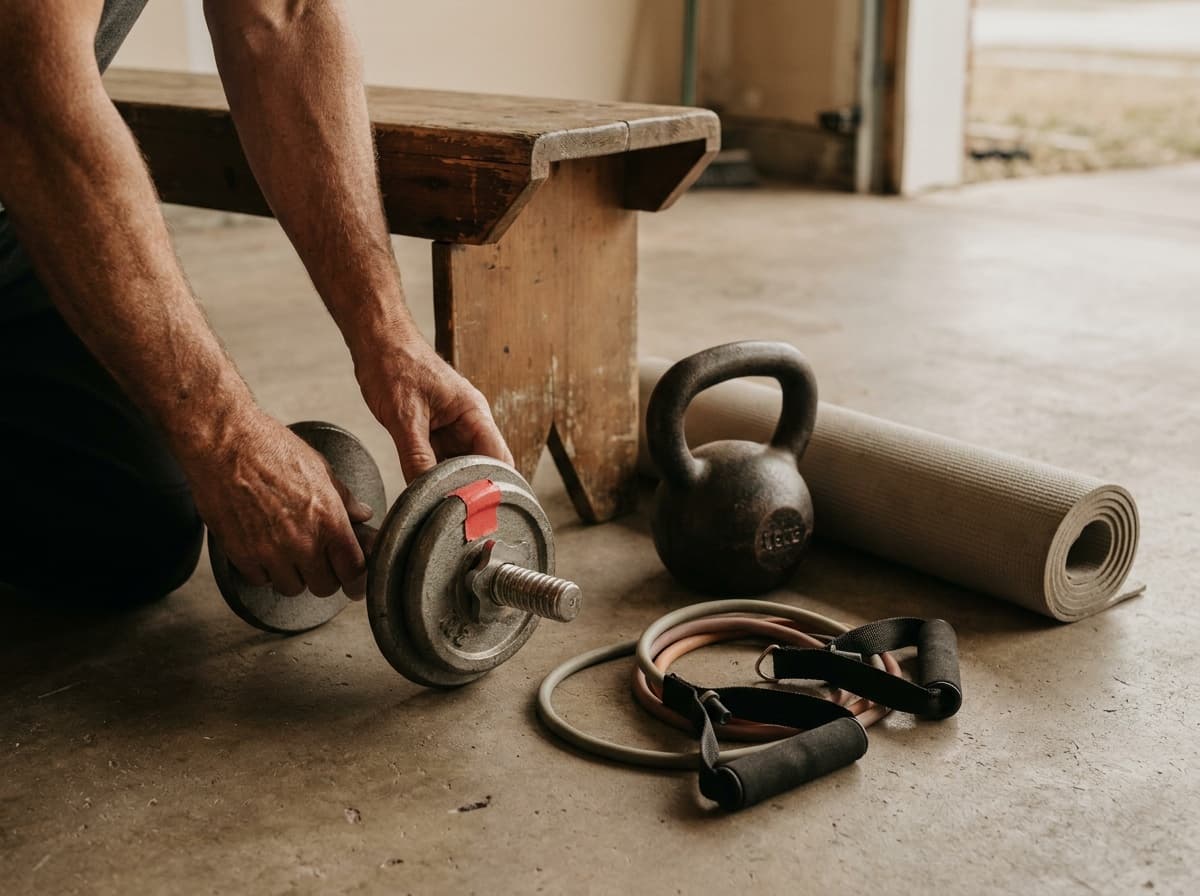
01 / Set up
Build the position.
- Connect the strap at the declared height and stand facing away from the sled with the lane behind you clear.
- Choose a surface and resistance that allow short backward steps without crossing the lane edge or losing the strap path.
02 / Execute
Do the work.
- Brace gently, keep the strap tensioned, and step backward one foot at a time while looking toward the clear endpoint.
- Maintain a repeatable torso and foot position instead of leaning harder to force the sled to move.
- Stop at the marked endpoint, lower tension before turning, and walk the sled back through the open return route.
Useful cues
See the endpoint before stepping
Keep tension steady
Make the turn a separate task
03 / Troubleshoot
Common ways it drifts.
- Backing into furniture, another person, or an unverified drop
- Letting the strap cross the ankles or pull the trunk into a loss of balance
- Using resistance that prevents a controlled stop before the endpoint
Exercise evidence field
What this page can claim.
Research can support a training category or expose a hazard without proving every stance, range, cue, or progression on this page.
3 evidence notes / 4 source linksResistance training is the supported category.
The 2026 ACSM position stand supports progressive resistance training for muscle function, hypertrophy, and physical performance in generally healthy adults, with multiple workable equipment and prescription choices.
- American College of Sports Medicine via PubMed CentralProfessional consensus
Loaded carries change the walking task.
A systematic review of 11 strongman-biomechanics studies found that the farmer's walk changed stride characteristics and ground-reaction forces compared with unloaded walking.
- Sports Medicine Open via PubMed CentralSystematic review
Range and cues remain adjustable.
A systematic review found that resistance-training range can affect strength and lower-limb hypertrophy, while a separate review found that attentional-focus effects vary across lifting tasks and populations.
- Scandinavian Journal of Medicine and Science in Sports via PubMedSystematic review
- Frontiers in Sports and Active Living via PubMedSystematic review
Exercise source register
Inspect the instruction trail.
Sources support the notes above. They do not convert this editorial-review page into individualized coaching or medical clearance.
- 01Resistance Training Prescription for Muscle Function, Hypertrophy, and Physical Performance in Healthy Adults
American College of Sports Medicine via PubMed Central
Professional consensus / Accessed 2026-07-26 - 02The Biomechanics and Applications of Strongman Exercises: A Systematic Review
Sports Medicine Open via PubMed Central
Systematic review / Accessed 2026-07-26 - 03Effects of Range of Motion on Resistance Training Adaptations: A Systematic Review and Meta-analysis
Scandinavian Journal of Medicine and Science in Sports via PubMed
Systematic review / Accessed 2026-07-26 - 04A Systematic Review of Attentional Focus Strategies in Weightlifting
Frontiers in Sports and Active Living via PubMed
Systematic review / Accessed 2026-07-26