Name the job
Start with the movement you intend to repeat, not the equipment label.
A kettlebell can cover a compact squat, hinge, press, row, and carry path with a fixed handle and a straightforward return to the floor. A sandbag adds a shifting center of mass, more ways to hold the shell, and a ground-to-lap or bear-hug path that changes the setup. Write the session you actually intend to repeat and the movement that would make the new load earn its space.
The American College of Sports Medicine position stand supports resistance training across multiple equipment and prescription choices for generally healthy adults. That supports matching the tool to the goal and constraints. It does not make a sandbag or kettlebell necessary, superior, or appropriate for every person.
- acsm-resistanceAmerican College of Sports Medicine via PubMed CentralProfessional consensus
Compare the load
A shifting bag changes the task even when the listed load looks familiar.
The Rogue Sandbag 2.0 uses a fillable shell with an integrated funnel, while a kettlebell keeps its handle, base, and mass distribution stable between repetitions. The bag can be held in a bear hug, at the ends, or through other declared handles. That changes the way you pick it up, brace around it, carry it, and place it down. The useful comparison is the complete movement loop, not a one-line weight number.
Loaded-carry evidence shows that carrying a load changes walking mechanics compared with unloaded walking, but the literature does not validate one exact sandbag load, distance, or posture cue for every reader. Treat the sandbag as a different task that deserves a conservative starting point, not as a kettlebell with a softer shell.
- rogue-sandbagRogue FitnessManufacturer source
- loaded-carrySports Medicine Open via PubMed CentralSystematic review
Choose the filler
The way a sandbag changes load is an ownership decision.
REP lists four size ranges and multiple filler bags, so one shell can cover several load bands while asking you to fill, close, and store the inner bags. Rogue's 2.0 keeps its funnel filler sewn into the lining, which reduces loose components but keeps the system tied to the shell's size. Hyperwear uses removable, prefilled SandBell weights inside the outer bag, so the filler pieces can also be used on their own. These are different ways to spend space and setup time, not a universal quality ranking.
The product pages separately label linked external review signals, but those observations belong to each publisher's sample and environment. They can add context about handling or ownership without becoming Workout Authority tests, ratings, durability results, or room-fit guarantees.
- rep-sandbagREP FitnessManufacturer source
- rogue-sandbagRogue FitnessManufacturer source
- hyperwear-sandbagHyperwearManufacturer source
Verify the room
A sandbag needs a marked lane, a controlled set-down, and a clean return path.
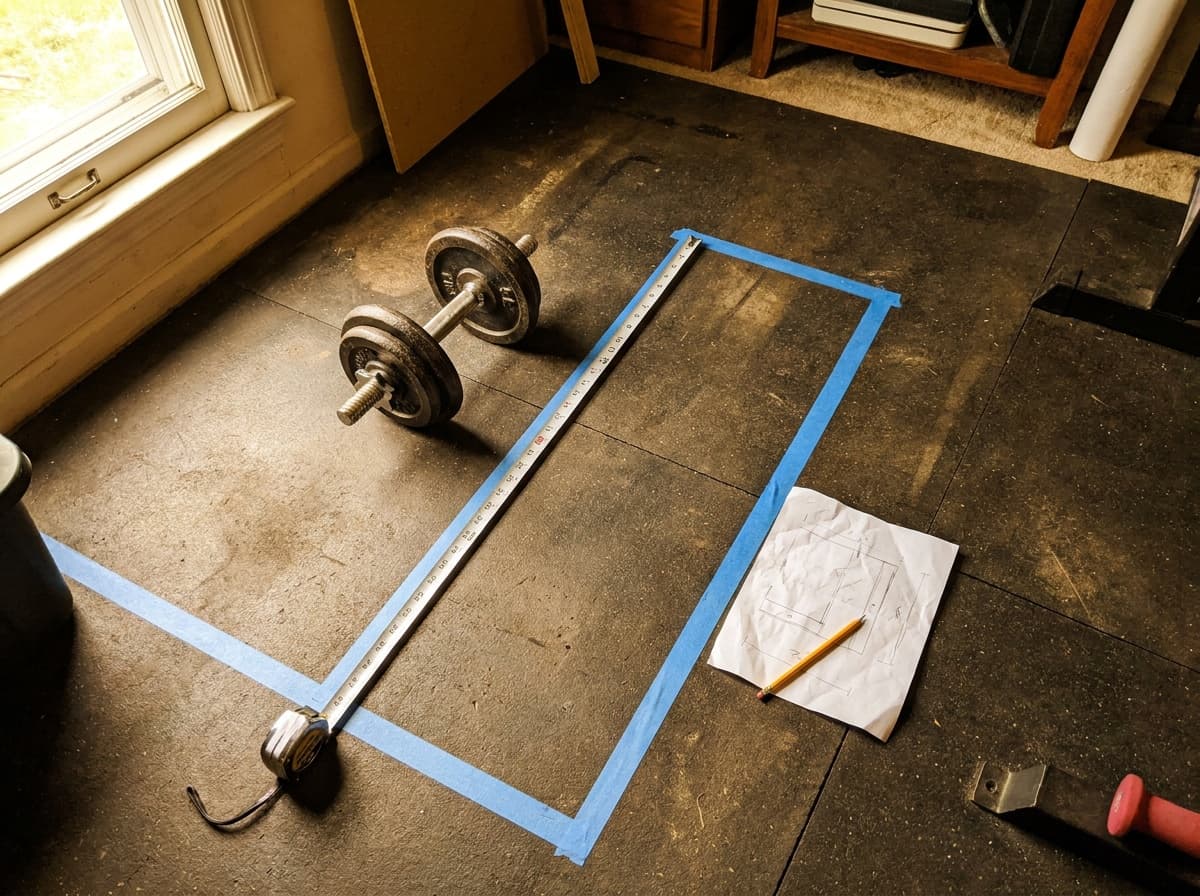
Measure the loaded length, widest point, carry lane, ground-to-lap space, storage location, and the path back to storage. Keep the bag away from sharp or abrasive surfaces, and follow the exact closure and filler boundary in the current manual. A mat can define a clean movement surface, but it does not turn a room into an impact-rated or structurally approved space.
Use a floor and room decision before the purchase. If the bag would share a lane with a slam ball, plyo box, rack, or cardio machine, mark each path separately and decide which job gets priority. If you cannot control the set-down or return, the better next move may be a kettlebell, a lighter bag, or no new load yet.
- rep-sandbagREP FitnessManufacturer source
- rogue-sandbagRogue FitnessManufacturer source
- hyperwear-sandbagHyperwearManufacturer source
- cpsc-recallsU.S. Consumer Product Safety CommissionPublic-health guidance
Choose the next move
Buy the format that solves the repeatable job you can actually support.
Choose a kettlebell when the compact handle, predictable shape, and simple reset path cover the week. Choose REP when adjustable filler ranges and seven handle positions are worth the fill-and-store work. Choose Rogue when the integrated funnel and compact shell are the cleaner ownership path. Choose Hyperwear when contained, prefilled modular weights and individual SandBell use matter. Choose no sandbag yet when the surface, route, or movement remains unresolved.
The product records keep those paths separate from first-party testing. The exercise records add bear-hug carry, clean-to-front, and front squat as canonical sandbag movements with source-aware boundaries. Use the guide, method, and setup records together so the retailer click finishes a decision rather than creating one.
- acsm-resistanceAmerican College of Sports Medicine via PubMed CentralProfessional consensus
- rep-sandbagREP FitnessManufacturer source
- rogue-sandbagRogue FitnessManufacturer source
- hyperwear-sandbagHyperwearManufacturer source
- cpsc-recallsU.S. Consumer Product Safety CommissionPublic-health guidance