Hinge / Developing
Barbell Deadlift
Practice a floor-to-stand hinge with a declared start height, a clear bar path, and a controlled set-down.
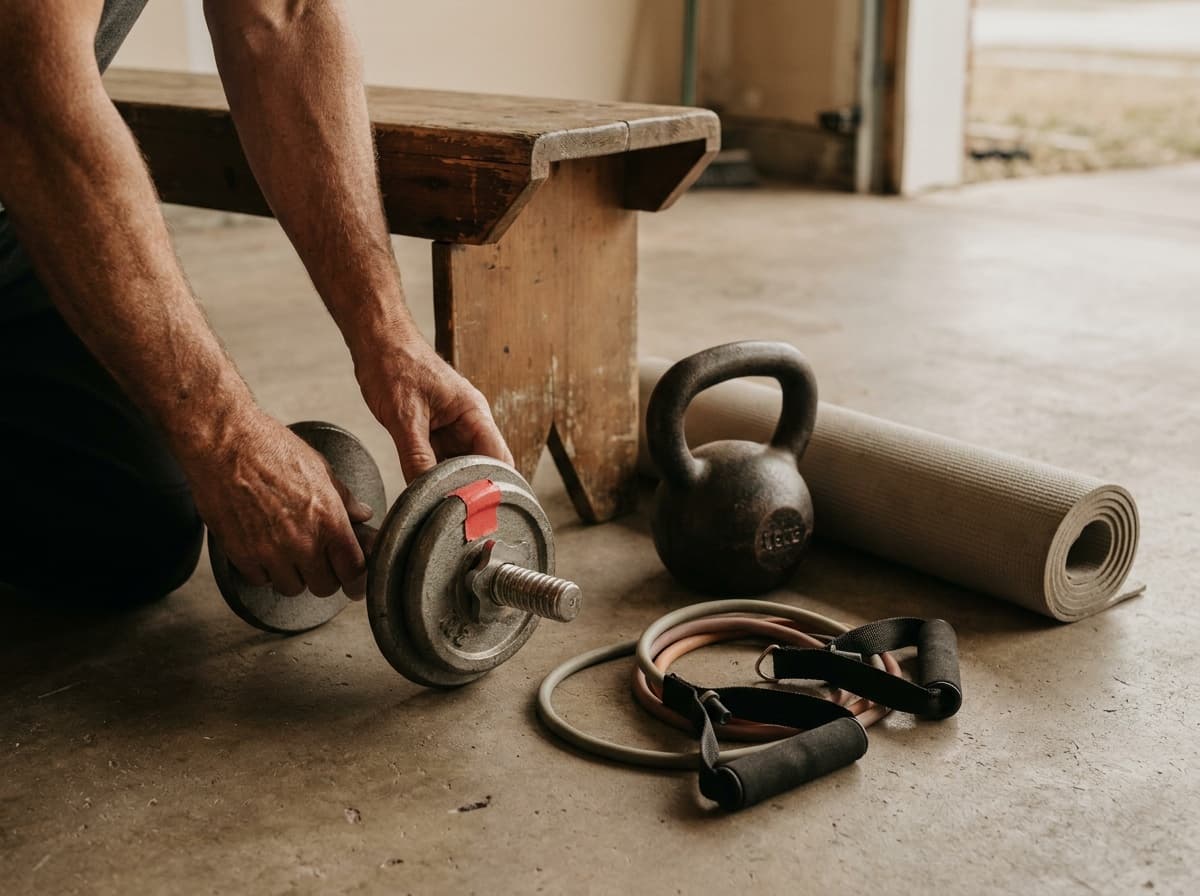
01 / Set up
Build the position.
- Set the bar, plates, floor surface, and return lane so the start height and end position are visible before the first pull.
- Stand with the feet and hands arranged around the bar, brace gently, and rehearse the unloaded hinge and set-down before adding load.
02 / Execute
Do the work.
- Create tension through the feet and hands while keeping the bar close and the shoulders set over the starting position.
- Push the floor away and stand without turning the pull into a fast extension or a bar path that drifts around the knees.
- Lower the bar through the same clear route, pause when it reaches the declared start position, and reset before the next repetition.
Useful cues
Build tension before the pull
Keep the bar close
Set down as deliberately as you lift
03 / Troubleshoot
Common ways it drifts.
- Pulling before the feet, hands, and bar are arranged for the declared start height
- Letting the bar move away from the legs as the load rises
- Dropping or bouncing the bar when the floor and return boundary have not been verified
Exercise evidence field
What this page can claim.
Research can support a training category or expose a hazard without proving every stance, range, cue, or progression on this page.
2 evidence notes / 3 source linksResistance training is the supported category.
The 2026 ACSM position stand supports progressive resistance training for muscle function, hypertrophy, and physical performance in generally healthy adults, with multiple workable equipment and prescription choices.
- American College of Sports Medicine via PubMed CentralProfessional consensus
Range and cues remain adjustable.
A systematic review found that resistance-training range can affect strength and lower-limb hypertrophy, while a separate review found that attentional-focus effects vary across lifting tasks and populations.
- Scandinavian Journal of Medicine and Science in Sports via PubMedSystematic review
- Frontiers in Sports and Active Living via PubMedSystematic review
Exercise source register
Inspect the instruction trail.
Sources support the notes above. They do not convert this editorial-review page into individualized coaching or medical clearance.
- 01Resistance Training Prescription for Muscle Function, Hypertrophy, and Physical Performance in Healthy Adults
American College of Sports Medicine via PubMed Central
Professional consensus / Accessed 2026-07-26 - 02Effects of Range of Motion on Resistance Training Adaptations: A Systematic Review and Meta-analysis
Scandinavian Journal of Medicine and Science in Sports via PubMed
Systematic review / Accessed 2026-07-26 - 03A Systematic Review of Attentional Focus Strategies in Weightlifting
Frontiers in Sports and Active Living via PubMed
Systematic review / Accessed 2026-07-26
Read the decision