Home gym / room first
Build the room around the training job.
A home gym works when the equipment is easy to reach, honest about its footprint, and connected to the sessions you will actually repeat.
Built for:people building a first setup, sharing a room, renting, or deciding whether a larger purchase will earn its space.
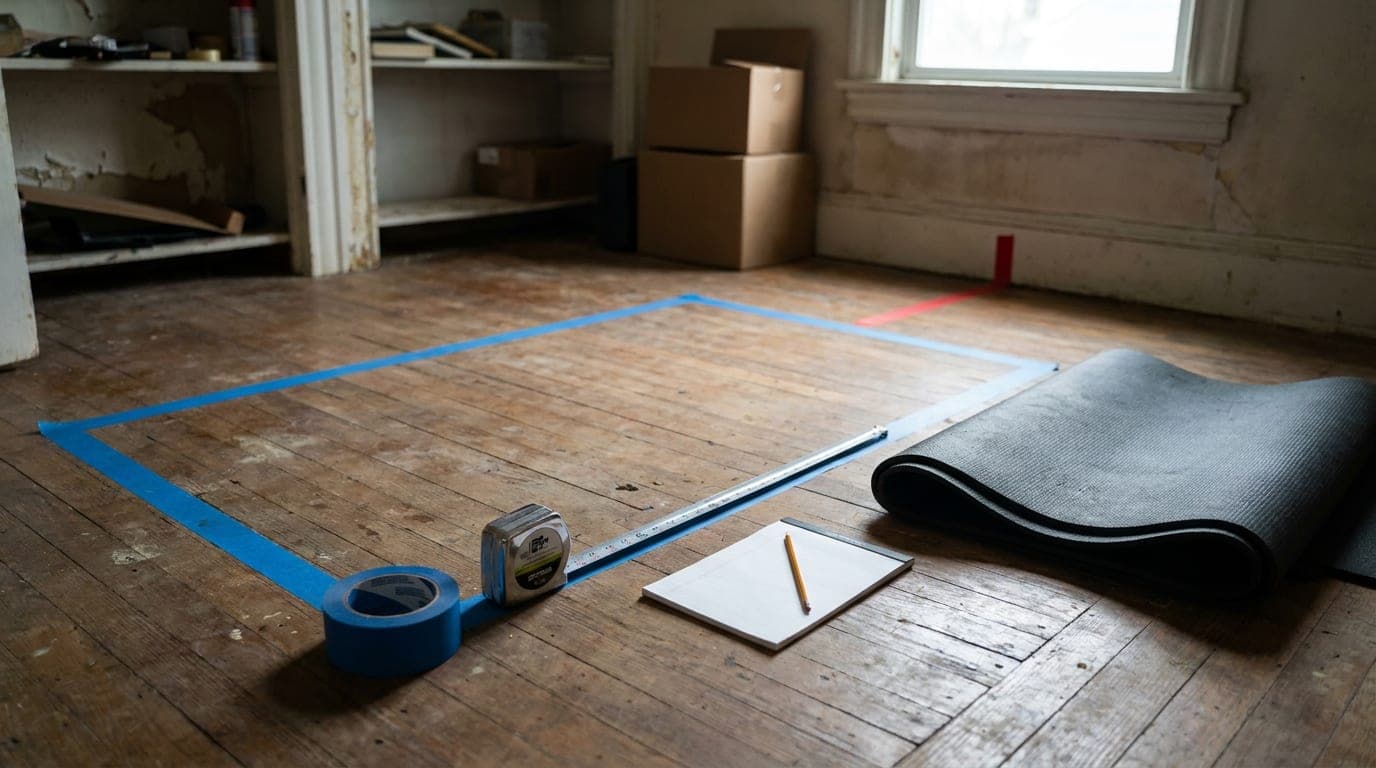
Make the room support the plan.
Write the training jobs before the shopping list, choose one progressive loading path, then add support only when the program or room makes the need clear.
A product can be useful without being right for your room. Workout Authority treats space, storage, noise, and evidence as part of the purchase decision.
Set the room before the catalog.
Each route keeps the training job visible, then hands you to a canonical guide, program, exercise, tool, or equipment record.
- 01
Resolve the room
Measure the working envelope, not just the box.
The planner keeps usable space, noise ceiling, reset routine, and build scope visible before a complete system is ranked.
Run the room planner - 02
Compare systems
See what each setup covers and what it leaves out.
Complete setups connect products to programs and expose the tradeoff between a put-away station, a corner, and a dedicated room.
Compare complete setups - 03
Inspect the record
Facts first. Fit second. Link last.
Product pages separate manufacturer specifications, editorial judgment, and first-party test state so a retailer click does not carry more certainty than the record earns.
Read the gear method - 04
Protect the room
Choose a surface for the work, not the identity.
The flooring guide separates a movement mat, modular rubber, a continuous roll, and a reversible turf lane before any retailer handoff.
Choose a flooring format - 05
Return the load
Make storage part of the training path.
The storage guide compares low plate storage, full dumbbell racks, compact towers, and in-rack shelves by access, compatibility, and reset.
Compare storage formats - 06
Choose the flexible load
Compare a shifting bag with a fixed handle.
The sandbag guide separates load behavior, filler systems, carry lanes, surface boundaries, and the next useful equipment handoff.
Compare sandbag and kettlebell - 07
Protect the lane
Measure a sled before it occupies the room.
The sled guide keeps surface contact, stop distance, turning space, strap or wheel route, and storage visible before a conditioning purchase.
Plan a sled lane - 08
Verify the anchor
Give the rope a working lane and a return path.
The battle-rope guide compares length, diameter, anchor, surface, wave clearance, shedding, and storage before the retailer handoff.
Plan a battle-rope lane - 09
Control the recoil
Make the band path part of the room plan.
The resistance-band guide compares long loops and short bands by movement, anchor, inspection, recoil, material, and reset state before shopping.
Plan the band path - 10
Commit to the bar
Make the rack, plates, floor, and reset route agree.
The barbell fundamentals guide answers the lift jobs, support, plate format, and return path before the equipment system earns the room.
Plan the barbell system - 11
Add the support
Keep belts and straps behind the loading path.
The lifting-accessory guide separates bracing, grip, release, fit, care, and storage so a small purchase does not hide a larger room or movement decision.
Compare accessory formats - 12
Open the rack
Use an attachment to add a named movement, not noise.
The rack-attachment guide separates collars, landmines, fixed dip interfaces, and adjustable dip handles by rack family, clearance, hardware, and return path.
Plan the rack interface
Source boundary
Useful advice still needs a limit.
These references support the category-level guidance on this page. They do not turn general information into a diagnosis, individualized prescription, or product test.
- 01Physical Activity Guidelines for Americans, second editionOffice of Disease Prevention and Health Promotion
- 02ACSM Resistance Training Guidelines UpdateAmerican College of Sports Medicine
- 03Advertising substantiation policy statementFederal Trade Commission